Solving Multi-Brand Inverter Integration: Depcellent EMS Monitors Solar Pumps in Bangladesh
An independent EMU100-5 acquisition solution connects multi-brand solar pump sites in Bangladesh, monitoring PV generation, grid imports, exports and pump consumption in one platform.
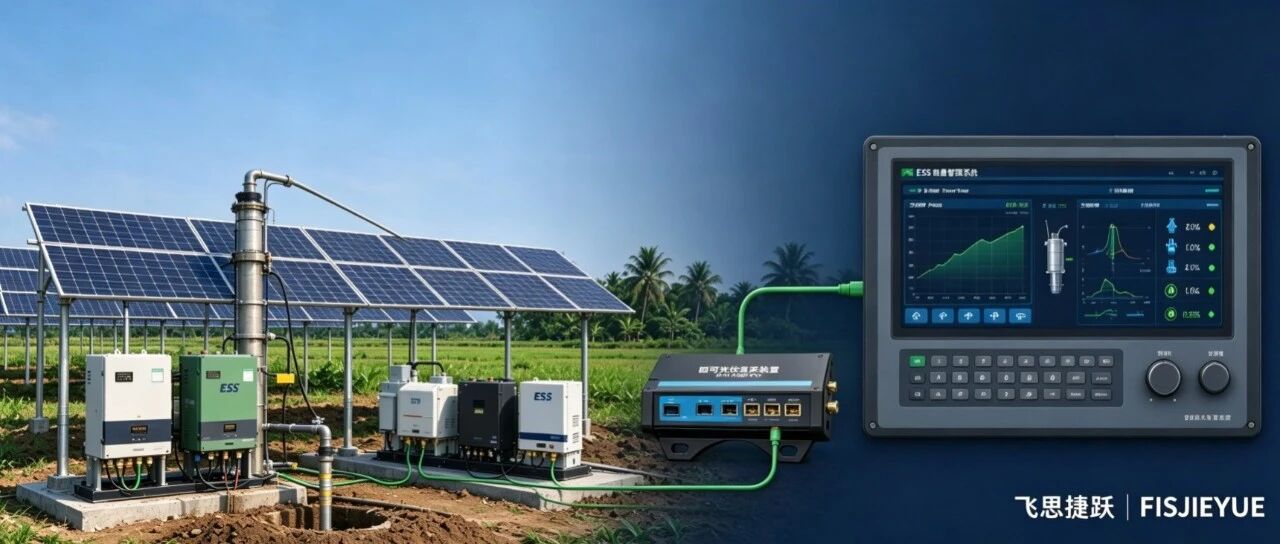
For overseas renewable energy projects, a major challenge is often not the quality of generation equipment but connecting on-site data.
Depcellent recently delivered a large agricultural solar pump monitoring project in Bangladesh.
This article explores the customer’s complex site conditions, the challenges they faced and how the solution addressed them.
What challenges did the customer face?
The customer operates many solar pump houses in Bangladesh and needs to consolidate data from hundreds of pumping stations into a central headquarters platform to evaluate project benefits.
Multi-brand inverters created data silos. Existing grid-tied and pump inverters used incompatible collectors and diverse protocols, preventing unified data integration.
Four energy accounts needed to be reconciled: PV generation, electricity purchased from the grid, surplus exported to the grid and pump consumption. Conventional approaches struggled to track all four in one system.
Sites were widely dispersed, often remote and without networking. Reworking existing electrical circuits would increase installation time, safety concerns and outage risks.
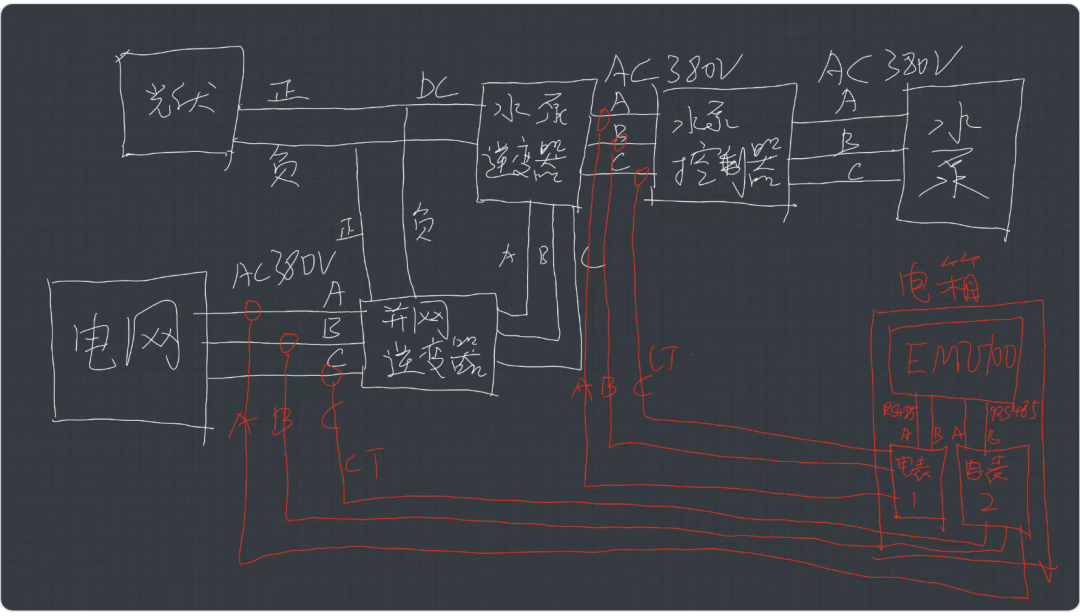
How did Depcellent solve the problem?
The customer required accurate data and fast deployment without changing existing equipment. Rather than integrating every inverter protocol, Depcellent used independent third-party EMS monitoring at the electrical level.
1. Measure directly with split-core CTs
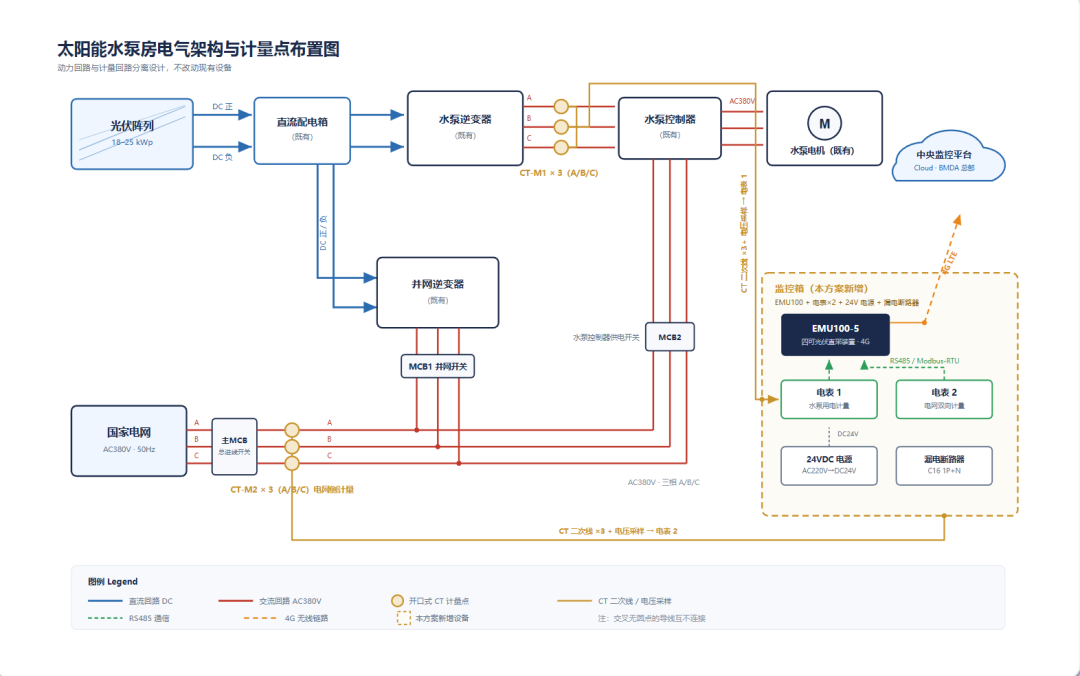
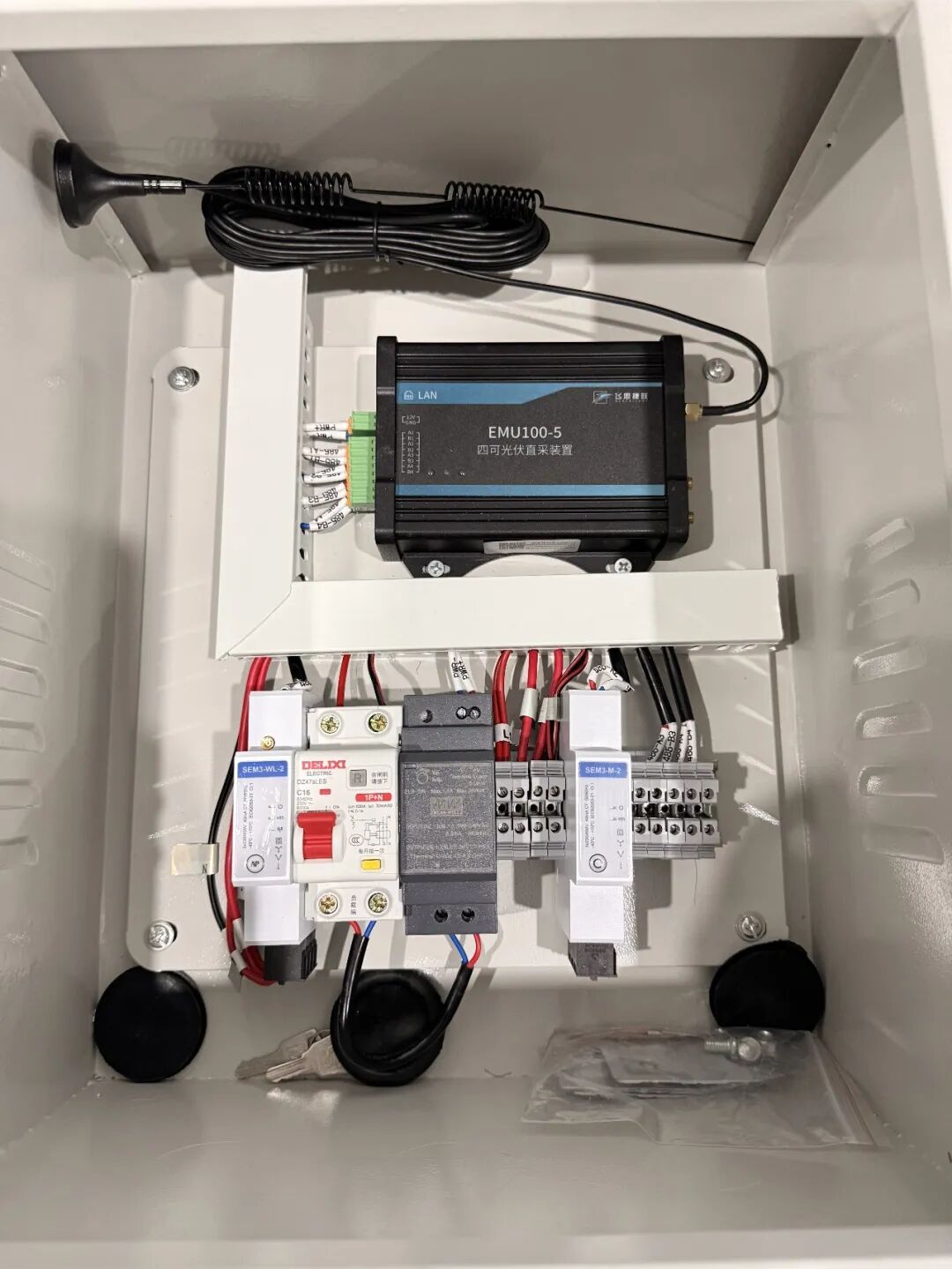
The solution uses an EMU100-5 PV acquisition device, two three-phase smart meters and six split-core CTs. Installers clip the CTs around cables without cutting or modifying the main circuit. Direct electrical measurement removes dependence on inverter-brand protocols.
2. Calculate PV generation using energy balance
The EMS calculates PV generation locally at the edge using the following energy-balance formula:
PV generation = pump consumption + grid exports - grid imports.
Bidirectional measurement from two meters enables local calculations within seconds and provides all four monitoring values. The source article reports Class 1 metering accuracy.
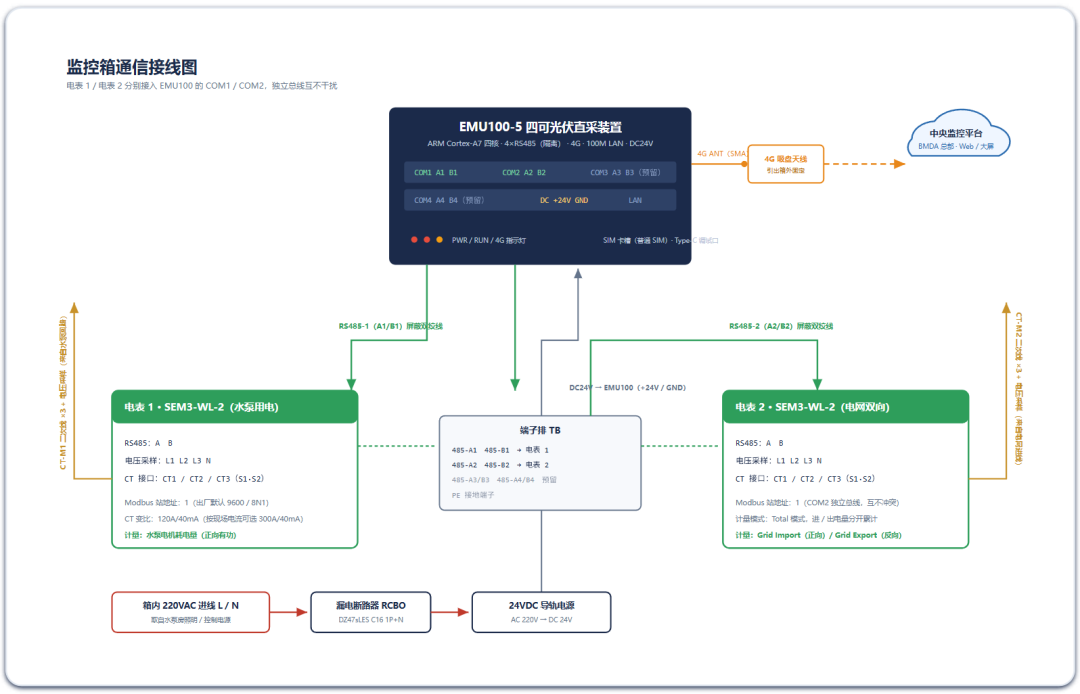
3. Connect to the cloud over 4G
The monitoring enclosure includes 4G connectivity for dispersed sites without wired networking. Factory-configured equipment connects securely using a standard SIM card. The EMU100-5 includes 8GB of local storage to buffer data during connectivity interruptions and resume uploads when power is restored. The source article reports data completeness of at least 99%.
4. Factory integration for installation in about two hours
The controller, meters, power supply and protective switches are integrated into an IP54 wall-mounted enclosure and undergo factory burn-in testing. Site work consists of mounting the box, clipping on CTs, wiring and powering up. The source article reports installation in about two hours per site, reducing overseas labor and installation errors.
Why choose Depcellent?
A good energy management solution understands the site. Independent third-party acquisition avoids dependence on existing inverter systems and extensive networking costs: one acquisition box per site, four energy measurements and one centralized platform.
Four site measurements, one platform
- PV generation
- Grid imports
- Grid exports
- Pump consumption
About Depcellent
Shenzhen Depcellent Technology is a national high-tech enterprise specializing in energy storage EMS and zero-carbon industrial park microgrid control. It provides integrated EMS solutions for storage, PV-storage and PV-storage-charging applications worldwide.
Its core engineering team comes from NARI and other leading Chinese power companies. Since 2012, the team has worked in power-system protection and grid dispatch, building over a decade of grid-level expertise and a storage safety control system described in the source article as exceeding industry standards.
The company’s headquarters and R&D center are in Shenzhen, with a software technology center in Liuzhou and manufacturing in Guangzhou. Regional service centers are located in Changsha and Chengdu, while international operations cover Europe, the Middle East, Southeast Asia and the Americas.
With the mission of making storage safer and more efficient, Depcellent applies grid-level technology to support the renewable energy industry and aims to become a benchmark in global renewable energy management systems.